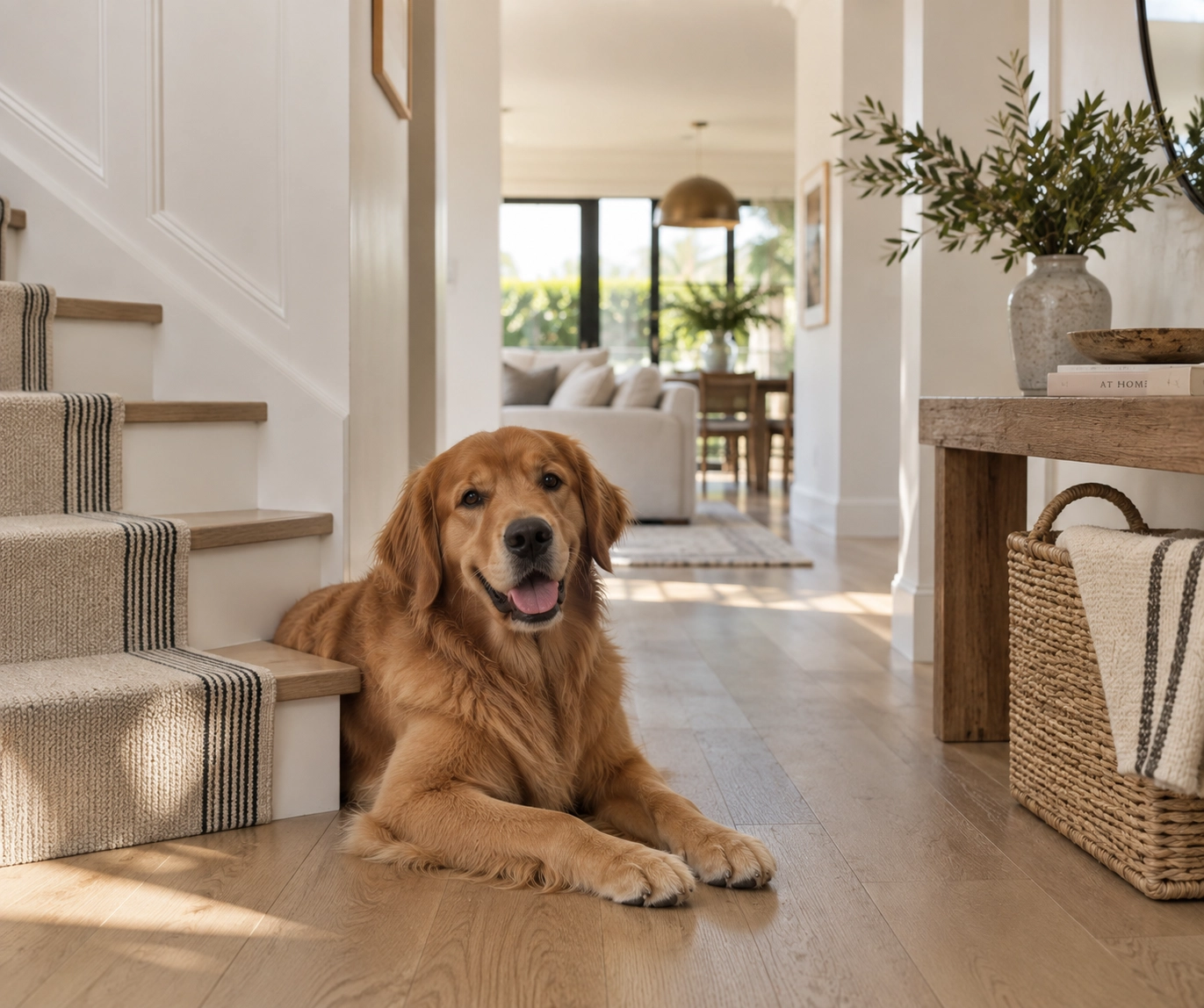
No pets" feels like the safe default — but in a pet-loving market like Orange County, it can quietly shrink your tenant pool.
“No pets” is the reflex answer for a lot of owners, and I understand why — nobody wants scratched floors or a lingering odor at move-out. But the safe-sounding default isn’t always the smart one. In a pet-heavy market like Orange County, a blanket no-pets policy can quietly cost you tenants, rent, and time on market. The real question isn’t “pets or no pets” — it’s how to allow them on terms that protect your home.
Here’s the honest math, the risks worth taking seriously, and how to write a pet policy that captures the upside without the downside.
The case for allowing pets
A large share of renters have a pet, and many won’t even tour a home that won’t take one. When you say no pets, you’re removing yourself from those searches entirely — a meaningful slice of qualified, well-qualified tenants you’ll never hear from. The practical effects are consistent:
A bigger applicant pool. More qualified applicants means more competition for your home and a faster lease-up — fewer vacant weeks, which is where owners actually lose money.
Longer tenancies. Pet owners often struggle to find pet-friendly rentals, so once they land somewhere that welcomes their animal, they tend to stay. That stability lowers turnover costs.
Room to charge for it. A reasonable pet policy can support additional pet rent or a pet deposit (within legal limits), which offsets the added wear risk.
Fewer vacant days and longer tenancies are two of the biggest levers on a rental’s return. That’s the quiet cost of a reflexive “no.”
Durable flooring and the right finishes make a home genuinely pet-ready — and take most of the risk out of the decision.
The risks — and how real they are
The concerns are legitimate, so let’s be straight about them. Pets can cause damage — scratched floors, stained carpet, chewed trim, odor. There’s added liability to think about, particularly with certain dogs, which is why your landlord insurance policy and any breed considerations deserve a look. And a poorly screened pet in a poorly prepared home can get expensive.
But most of that risk is manageable with preparation and a good policy. Durable flooring instead of carpet, a clear pet addendum, and a pet deposit turn “scary unknown” into “priced-in variable.” At Bear, our Pet Damage Protection guarantee backs owners up to $1,000 for pet-related damage beyond the deposit — because we’d rather help you say a confident “yes” than watch you turn away good tenants out of fear.
Know the law before you set a policy
A few California rules shape what you can and can’t do:
Assistance animals are not pets. Under fair-housing law, service animals and emotional-support animals are not considered pets. You generally cannot charge pet rent or a pet deposit for them, apply breed or size limits, or refuse them — even in a “no pets” property. This is a common and costly area to get wrong, so understand it before you write anything.
Pet deposits count toward the deposit cap. California limits the total security deposit you can collect, and a “pet deposit” counts within that cap — it isn’t a separate bucket on top. (See our guide to California’s security deposit law for how the cap works.)
Pet rent is generally allowed. Ongoing monthly pet rent is a common, lawful way to be compensated for added wear, separate from the deposit.
The mistake that costs owners the most here: treating a service animal or ESA like a pet. Charging a pet deposit or applying a breed restriction to an assistance animal can trigger a fair-housing complaint. When an animal comes up in screening, get the classification right first.
How to write a pet policy that protects you
If you decide to allow pets — and for most OC single-family homes, I think it’s worth strong consideration — do it deliberately:
Use a written pet addendum that names the specific approved pet(s), sets expectations for behavior and cleanup, and makes the tenant responsible for pet-related damage.
Screen the pet, not just the tenant. Ask for age, breed, weight, vaccination records, and prior rental history with the animal. A calm, well-documented adult pet is a very different risk than an unhoused-trained puppy.
Set reasonable limits on number and size where lawful, and require the tenant to carry renter’s insurance.
Prepare the home. Hard-surface flooring and washable finishes dramatically reduce the downside and make the home easier to reset between tenants.
Price it. Use pet rent and a deposit (within the cap) so the added wear risk is compensated, not absorbed.
Marketing a home as pet-friendly opens it to searchers a no-pets listing never reaches.
My take
For most single-family homes and townhomes in Orange County, a thoughtful “yes with conditions” beats a blanket “no.” You widen your pool, lease faster, keep tenants longer, and get paid for the added risk — while a solid addendum, careful pet screening, and a pet-ready home keep the downside small. The owners who lose money on pets are almost always the ones who allowed them casually, without a policy. Do it deliberately and it’s one of the easier wins in this business. It’s a big part of why our owners lease quickly (an average of 18 days versus roughly 32 for the market) and why 96% renewed with us in 2024.
No — you can generally set a no-pets policy for ordinary pets. However, assistance animals (service animals and emotional-support animals) are not considered pets under fair-housing law, and you typically must accommodate them even in a no-pets property, without pet rent or a pet deposit. Get that distinction right before setting any policy.
You can collect a pet deposit, but it counts toward California’s overall security-deposit cap — it’s not an extra amount on top. Many owners instead (or additionally) charge monthly pet rent, which is generally allowed and isn’t part of the deposit. Confirm current limits with the security-deposit rules.
Often, yes. A large share of renters have pets and filter out no-pets listings, so allowing pets widens your applicant pool, which tends to reduce vacancy and support longer tenancies. Those two effects — fewer vacant days and less turnover — are usually worth more than the added wear risk when the policy is done right.
Use a written pet addendum, screen the pet as carefully as the tenant, require renter’s insurance, set lawful size or number limits, prepare the home with durable flooring, and price in pet rent and a deposit. Working with a manager adds another layer — our Pet Damage Protection covers up to $1,000 in pet-related damage beyond the deposit.
This post is general guidance, not legal advice. Consult a California real estate attorney for property-specific questions.
About the author
Adam Tomalas
Adam is the founder and designated broker of Bear Property Management Co., a boutique residential property management firm serving 15 cities across Orange County. He personally reviews every rental analysis and signs every Bear Promise guarantee.
CA DRE #02222825 · Member, California Association of REALTORS® · Newport Beach, CA
Owners obsess over price and condition — as they should — but the calendar quietly does just as much to determine how fast a home leases and for how much. In a family-heavy market like Orange County, timing your listing to the school year can be the difference between a
San Clemente rents span a wide range — a Talega family home and a Southwest beach cottage play by different rules. Here’s a neighborhood-by-neighborhood look at what drives rent in 2026 and how to price your home without leaving money on the table.
Corona del Mar is one of the priciest rental submarkets in Orange County — but “CdM” covers everything from Flower Streets cottages to oceanfront estates. Here’s what actually drives rent from block to block, and how to price your home right in 2026.
See the numbers for your property
Get a free rental analysis —personally reviewed by Adam.
Tell us about your property and within 24 hours you’ll receive a written analysis prepared specifically for your address. No obligation, no pressure.