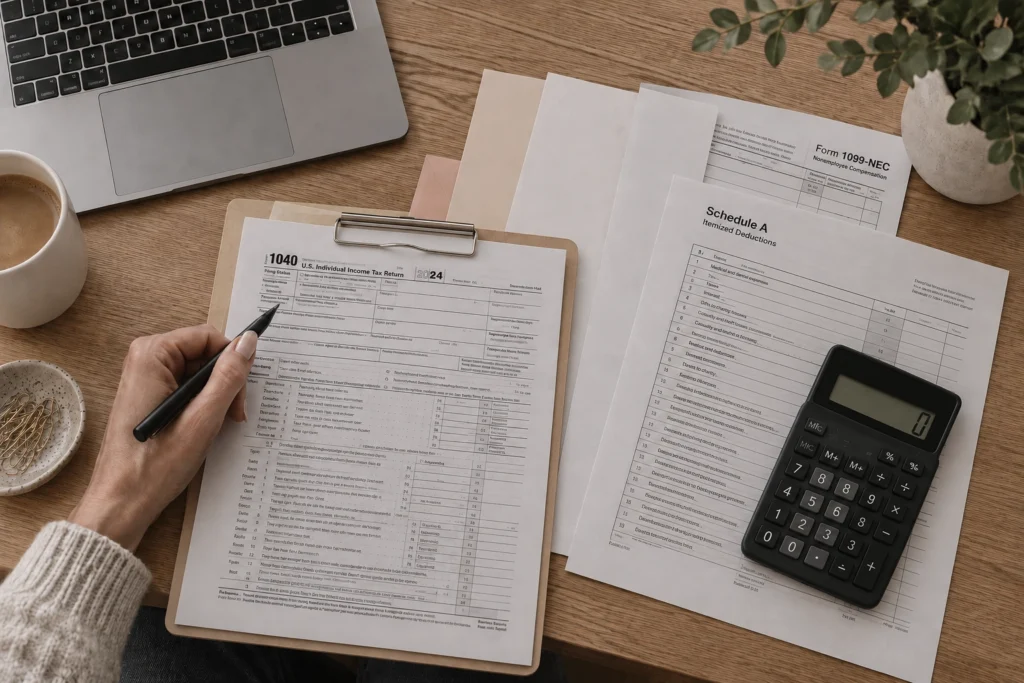
The owners who breeze through tax season are the ones who did the work in December — not the ones hunting for receipts in April.
Every year I watch two kinds of rental owners hit tax season. One group has a tidy folder of statements, receipts, and mileage logs, hands it to their CPA, and moves on. The other spends April digging through email for a plumber’s invoice from last spring. The difference isn’t sophistication — it’s a simple checklist run before year-end.
This is that checklist, written for Orange County rental owners. I’m a property manager, not a CPA, so treat this as a guide for getting organized and a set of questions to bring to your tax professional — not as tax advice. Let’s make sure nothing deductible slips through the cracks.
1. Gather your income records
Start with what came in. Total your rent collected for the year, plus any other income — late fees, pet rent, or a portion of a security deposit you kept for damage (kept deposits can be taxable income, returned ones aren’t). Rental income and expenses are generally reported on IRS Schedule E, so your goal is a clean per-property total for the year.
If Bear manages your home, this is already done — your year-end owner statement lays out gross rent, every expense, and net distributions per property, ready to hand to your CPA. If you self-manage, reconcile your bank deposits against your lease records now, while the year is fresh.
2. Capture every deductible expense
This is where money is won or lost. Ordinary and necessary expenses to operate the rental are generally deductible in the year you pay them. Common ones for OC owners:
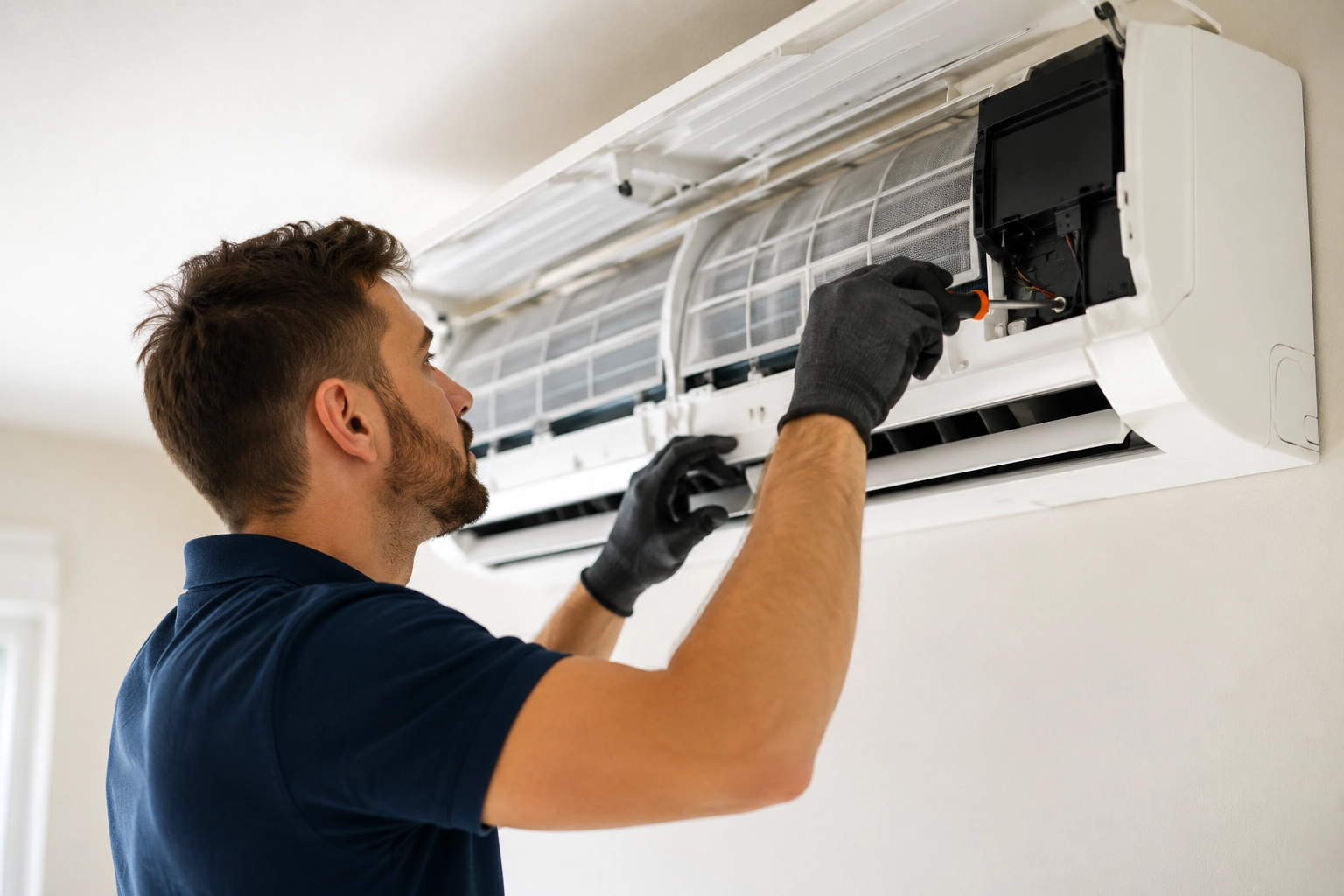
Repairs and maintenance — plumbing, HVAC service, painting, landscaping, pest control.
Property management fees — fully deductible as an operating expense.
Mortgage interest and property taxes — typically your two largest line items.
Insurance — landlord/dwelling policy premiums.
HOA dues — common and easy to forget in Newport Coast, Irvine, and other association-governed communities.
Utilities you pay, advertising and leasing costs, and legal or professional fees.
Travel and mileage to and from the property for management purposes — log it.
The trap is the difference between a repair and an improvement. Fixing a leaky faucet is a current-year repair. Replacing the roof or remodeling the kitchen is an improvement that gets capitalized and depreciated over time. Sort these before you file — your CPA will thank you.
A clean folder of statements and receipts is the single biggest thing that separates a smooth filing from a stressful one.
3. Don’t leave depreciation on the table
Depreciation is the deduction owners most often underuse. Residential rental buildings are generally depreciated over 27.5 years (the land itself isn’t depreciable), which means a meaningful non-cash deduction every year you own the property. It’s claimed on IRS Form 4562 and carried onto Schedule E.
Two things to confirm with your CPA: that you’re actually taking depreciation each year, and that major improvements you’ve made are being depreciated on their own schedules. If you’ve owned the home for years and aren’t sure depreciation has been captured correctly, that’s a conversation worth having before you file.
4. Handle 1099s for your contractors
If you paid an unincorporated contractor or vendor for services during the year above the IRS reporting threshold, you may need to issue a Form 1099-NEC — and these have an early-year deadline, so this belongs on your December list, not your April one. You’ll need each vendor’s Form W-9 (name, address, and TIN) to file.
Owners on full management typically don’t handle this themselves — vendor payments run through the manager, who tracks the documentation. If you self-manage, collect W-9s from anyone you might need to 1099 before you cut them a final check for the year. Chasing a W-9 in January is no fun.
5. Mind the California-specific items
California adds a few wrinkles OC owners shouldn’t miss:
The $800 annual LLC tax. If you hold your rental in an LLC, California charges a minimum $800 annual franchise tax (paid via FTB Form 3522), plus a possible fee on higher gross receipts. Budget for it. Deciding whether an LLC even makes sense? See our guide on putting your California rental in an LLC.
State depreciation differences. California doesn’t always conform to federal bonus depreciation rules, so your state and federal numbers may differ — another reason to lean on a CA-savvy CPA.
Nonresident owners. If you own OC rental property but live out of state, California withholding rules may apply to your rental income.
Track improvements as you make them — kitchen and bath upgrades get depreciated, and they raise your cost basis when you sell.
6. Set up next year while you’re at it
The best time to fix your recordkeeping is right now, before a new year of receipts piles up. A separate bank account for the rental, a single folder (digital is fine) for statements and invoices, and a habit of logging mileage will turn next year’s tax prep into a 20-minute task. If you’d rather not think about any of it, a manager who sends clean, itemized year-end statements does most of this for you.
Year-end quick list: total rent collected · sort repairs vs. improvements · confirm depreciation is being taken · collect vendor W-9s for 1099s · pay/plan the $800 CA LLC tax if applicable · gather mortgage-interest and property-tax statements · reconcile everything against bank records.
Generally, ordinary and necessary operating costs: mortgage interest, property taxes, insurance, repairs, management fees, HOA dues, utilities you pay, advertising, and professional fees, plus depreciation on the building. Improvements are capitalized and depreciated rather than deducted all at once. Confirm specifics with your CPA.
Residential rental buildings are typically depreciated over 27.5 years, giving you an annual non-cash deduction against rental income (land isn’t depreciable). It’s reported on Form 4562 and Schedule E. Many owners underuse it — confirm with your tax professional that depreciation is being claimed correctly each year.
If your rental is held in an LLC, California generally charges a minimum $800 annual franchise tax, paid via FTB Form 3522, with a possible added fee at higher gross receipts. If your property isn’t in an LLC, this doesn’t apply. Whether an LLC is worth it depends on your situation.
Yes — property management fees are generally a fully deductible operating expense on Schedule E. Keep your year-end management statement, which itemizes fees alongside all other expenses, so your CPA can capture everything in one place.
Want year-end statements that make tax season simple?Request a free rental analysis — I’ll personally review your property and send a written analysis within 24 hours. No obligation.
— Adam Tomalas, CA DRE #02222825
This post is general guidance, not legal or tax advice. Consult a California CPA or tax attorney for property-specific questions.
About the author
Adam Tomalas
Adam is the founder and designated broker of Bear Property Management Co., a boutique residential property management firm serving 15 cities across Orange County. He personally reviews every rental analysis and signs every Bear Promise guarantee.
CA DRE #02222825 · Member, California Association of REALTORS® · Newport Beach, CA
Owners obsess over price and condition — as they should — but the calendar quietly does just as much to determine how fast a home leases and for how much. In a family-heavy market like Orange County, timing your listing to the school year can be the difference between a
San Clemente rents span a wide range — a Talega family home and a Southwest beach cottage play by different rules. Here’s a neighborhood-by-neighborhood look at what drives rent in 2026 and how to price your home without leaving money on the table.
Corona del Mar is one of the priciest rental submarkets in Orange County — but “CdM” covers everything from Flower Streets cottages to oceanfront estates. Here’s what actually drives rent from block to block, and how to price your home right in 2026.
See the numbers for your property
Get a free rental analysis —personally reviewed by Adam.
Tell us about your property and within 24 hours you’ll receive a written analysis prepared specifically for your address. No obligation, no pressure.